

The AIHRE project — “Analysis and Boosting of Renewable H₂ in the POCTEP region” — continues to advance its mission of promoting green hydrogen across Spain and Portugal. Coordinated by CIDAUT, the initiative aims to build a robust hydrogen value chain in the POCTEP cross-border area, supporting research, technology development and deployment.
In November 2025, CIDAUT presented AIHRE at two key events, underscoring the project’s progress and commitment to integrating renewable hydrogen in regional energy systems.
🌐 What is AIHRE?
AIHRE is a collaborative European project funded under the Interreg Spain-Portugal Programme (POCTEP 2021–2027). With a budget of approximately €1.5 million and a duration of 36 months (from July 2023 to June 2026), the project seeks to harness the potential of green hydrogen in the POCTEP region by promoting cross-border cooperation, strengthening R&D capabilities, developing digital and experimental tools, and fostering the implementation of hydrogen-based value chains. The consortium gathers nine partners — research centers, universities and technology institutes from Spain and Portugal — with CIDAUT acting as coordinator. AIHRE’s work plan includes mapping the current hydrogen value-chain landscape in the cooperation region; designing models and management tools for renewable hydrogen systems; conducting R&D on key hydrogen technologies; and evaluating viable business models for industrial deployment of green hydrogen. Through this initiative, AIHRE intends to lay down the technological and business foundations for a hydrogen-powered economy in the POCTEP area — supporting industrial decarbonization and regional development alike.
AIHRE Workshop in Aveiro (6–7 November 2025)
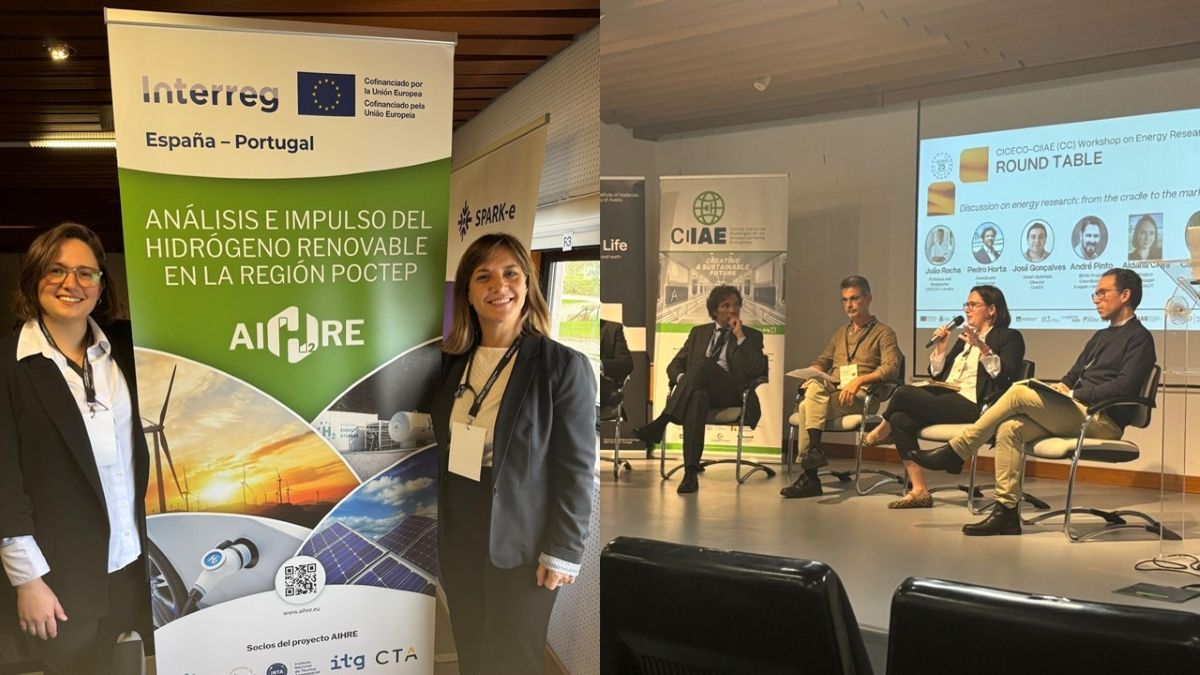
On 6–7 November 2025, the city of Aveiro hosted a collaborative workshop jointly organized by CIIAE and CICECO, gathering experts from across the Iberian hydrogen sector. The event served as a platform to bring together stakeholders — from research institutes to technology providers — with the shared aim of advancing renewable hydrogen in the cross-border region.
At the workshop, Henar Olmedo from CIDAUT presented the goals and technical roadmap of the AIHRE project. The presentation emphasized the strategic value of renewable hydrogen for the POCTEP area, and how AIHRE aims to develop the required tools, digital models and experimental capacities to enable its deployment. The discussion touched on integrating renewable hydrogen systems into existing energy infrastructures, key technological challenges, and the opportunities for SMEs and regional industries.
In addition, Aldana Chini, representing CIDAUT, took part in the roundtable “Discussion on energy research: from the cradle to the market.” Her contribution focused on the importance of bridging fundamental research with industrial implementation, the role of cross-border cooperation in accelerating innovation, and the opportunities AIHRE is creating for technology transfer and regional development. The discussion reinforced the need for coordinated efforts across institutions to ensure that hydrogen technologies reach market maturity efficiently and sustainably.
The workshop reinforced collaboration between Spanish and Portuguese partners, deepening the network of institutions engaged in hydrogen technologies and strengthening the cooperative framework for future developments under AIHRE.
Presentation at PMH2 – Madrid (18 November 2025)
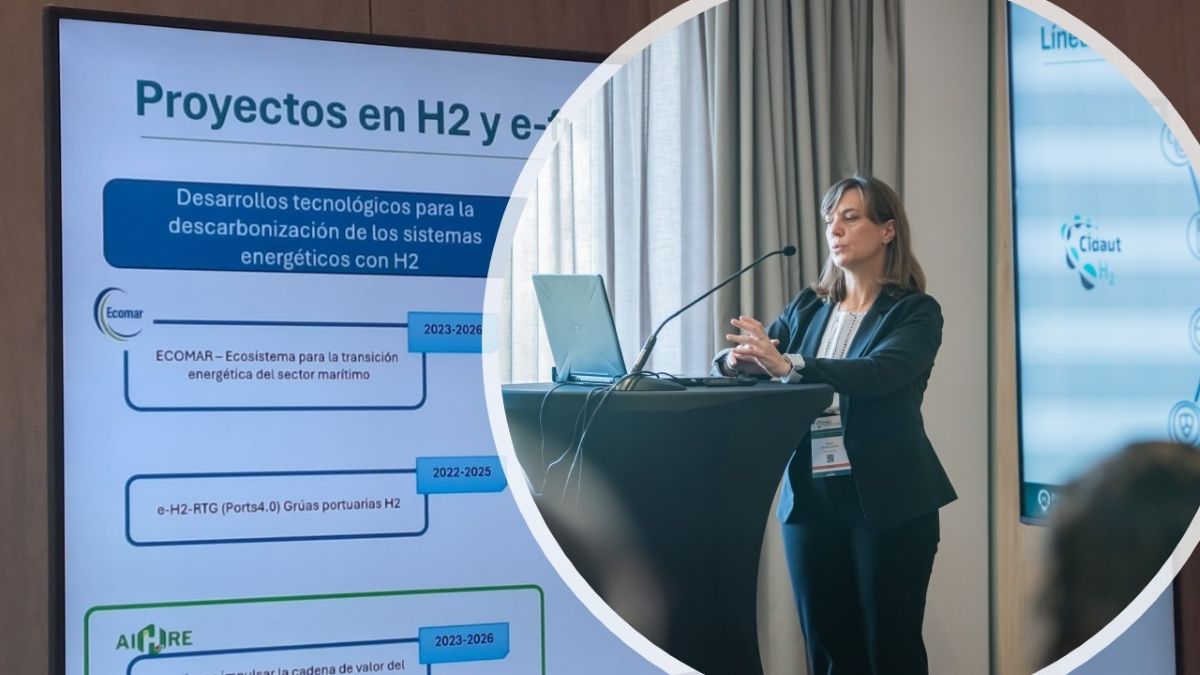
On 18 November 2025, CIDAUT was present at the PMH2 forum in Madrid — a significant national platform dedicated to hydrogen and fuel-cell technologies. During the forum, CIDAUT delivered a presentation on AIHRE’s progress, aims and expected outcomes.
The presentation focused on how AIHRE contributes to advancing green hydrogen production and deployment in the POCTEP region, highlighting the project’s potential to support decarbonization, improve energy resilience, and foster regional economic development. It also addressed ongoing technical developments, the roadmap for system integration, and how AIHRE plans to support local industries and ecosystems.
The appearance at PMH2 provided excellent visibility for the project, allowed an exchange with stakeholders from industry, research and policy domains, and helped identify possible collaboration opportunities for future phases of AIHRE.
Why AIHRE Matters — and What’s Next
- A strategic push for green hydrogen in the Iberian Peninsula: AIHRE represents an ambitious coordinated efforts to date to deploy renewable hydrogen value chains in the Spain-Portugal border region, mobilizing resources, expertise and institutional cooperation across borders.
- Building capacity and tools: By combining modelling, experimental research, digital tools and business-case evaluations, AIHRE aims to create the technological backbone necessary for a viable hydrogen economy in the POCTEP area.
- Boosting regional industry and sustainability: The project seeks to support local SMEs, create jobs, and contribute to industrial decarbonization — offering a realistic path toward energy transition while strengthening regional competitiveness.
- Laying the groundwork for long-term impact: With a clear timeline and collaborative structure, AIHRE is positioned to deliver actionable results by mid-2026, which could become building blocks for future hydrogen-based infrastructure and value chains.
CIDAUT remains fully committed to driving AIHRE toward its goals. Through coordination, research, and collaboration across borders, we believe that renewable hydrogen can become a transformative energy vector — not only for POCTEP, but for Spain, Portugal and Europe as a whole.
