

Over the past few months, CIDAUT has participated in several conferences, forums and technical events to present its vision and technological developments in the field of e-fuels. These synthetic fuels, known as e-fuels or electric fuels, are obtained from hydrogen generated by electrolysis of water using renewable electricity and biogenic CO2. They are therefore a renewable alternative to current fossil fuels and also offer a number of advantages: they enable the storage of renewable electricity through the hydrogen used in their production, enhancing the resilience and sustainability of the energy system; and they are compatible with existing infrastructures.
These e-fuels are becoming another component in the energy mix needed for the energy transition. however, as with other alternatives, they must still reach the level of technological maturity needed to become competitive and efficient. This is precisely where CIDAUT plays a key role—generating the necessary knowledge and advancing the technological developments that will make this possible, thanks to projects such as H2METAMO (development of modular facilities for the production of e-methane and e-ammonia from renewable hydrogen), OXIGASAR (development of hybrid oxy-gasification and electrolysis technology to obtain e-biofuels), GNS-CIUDEN (development of a technological demonstrator for methanation processes to produce e-methane), and ECOMAR (an innovation ecosystem focused on assessing the use of e-fuels in the maritime sector).
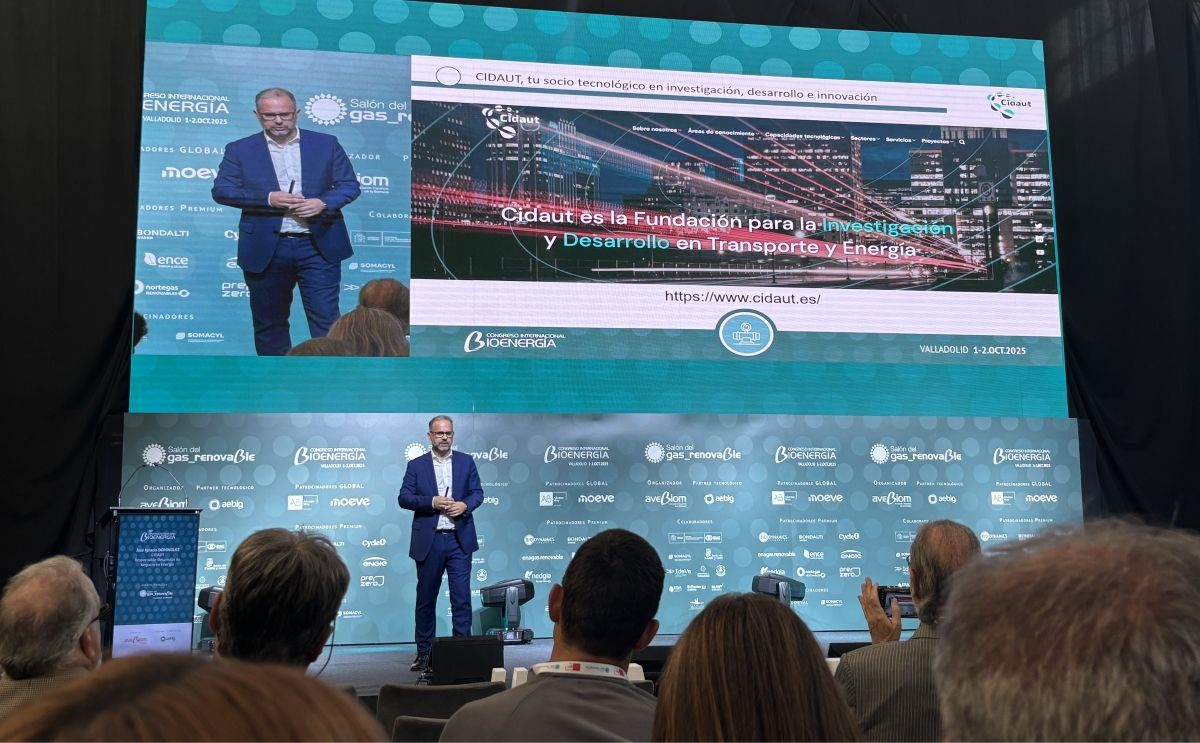
These projects were presented at various events, including the Bioenergy Congress and Renewable Gas Exhibition, held in Valladolid on 1 and 2 October 2025; the Bioeconomy Forum on 9 October 2025 in Soria; at the RH2EDIN congress held in Algeciras on 28 and 29 October 2025; and the decarbonisation in industry workshop organised by the Green Future Plat technology platform on 20 November 2025 in Madrid as part of the GENERA trade fair.