

Whether meeting fellow innovators in Soria, crossing borders to advance seawater-to-hydrogen technology in Finland, or stepping into a new leadership role at the heart of Hydrogen Europe Research, CIDAUT has spent the past months proving that progress in the hydrogen sector rarely happens in isolation, it happens through the people and partnerships that show up, again and again, to move the technology forward.
CyLH2Valley Consortium Meets in Soria
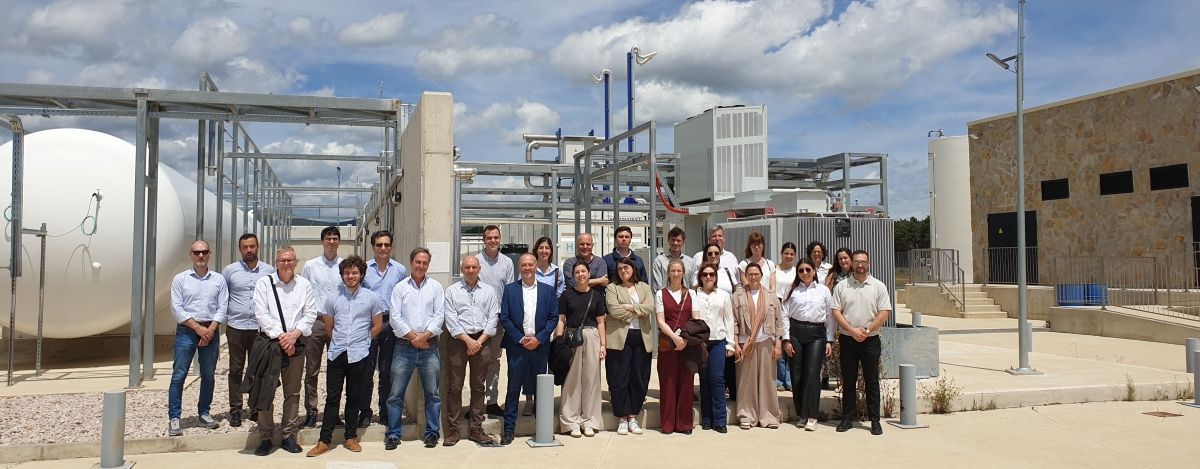
On 19–20 May, Soria hosted a consortium meeting of CyLH2Valley, the Horizon-funded green hydrogen valley project aiming to turn Castilla y León into a European reference in integrated hydrogen ecosystems. The event, opened by the Junta de Castilla y León’s territorial delegate brought together the project’s 37 partners to review progress across the value chain from production to storage, distribution, and end use. CIDAUT, represented by Aldana Chini, took part in the sessions, reinforcing the CIDAUT’s role in one of the region’s hydrogen initiatives.
Following the meeting, the partners toured H2DUERO, Castilla y León’s pioneer renewable hydrogen production plant. Situated in Garray and owned by Redexis and SOMACYL S.A., the facility offered the consortium a first-hand look at its production and operational capabilities.
Sea4Volt Partners Convene in Espoo, Finland
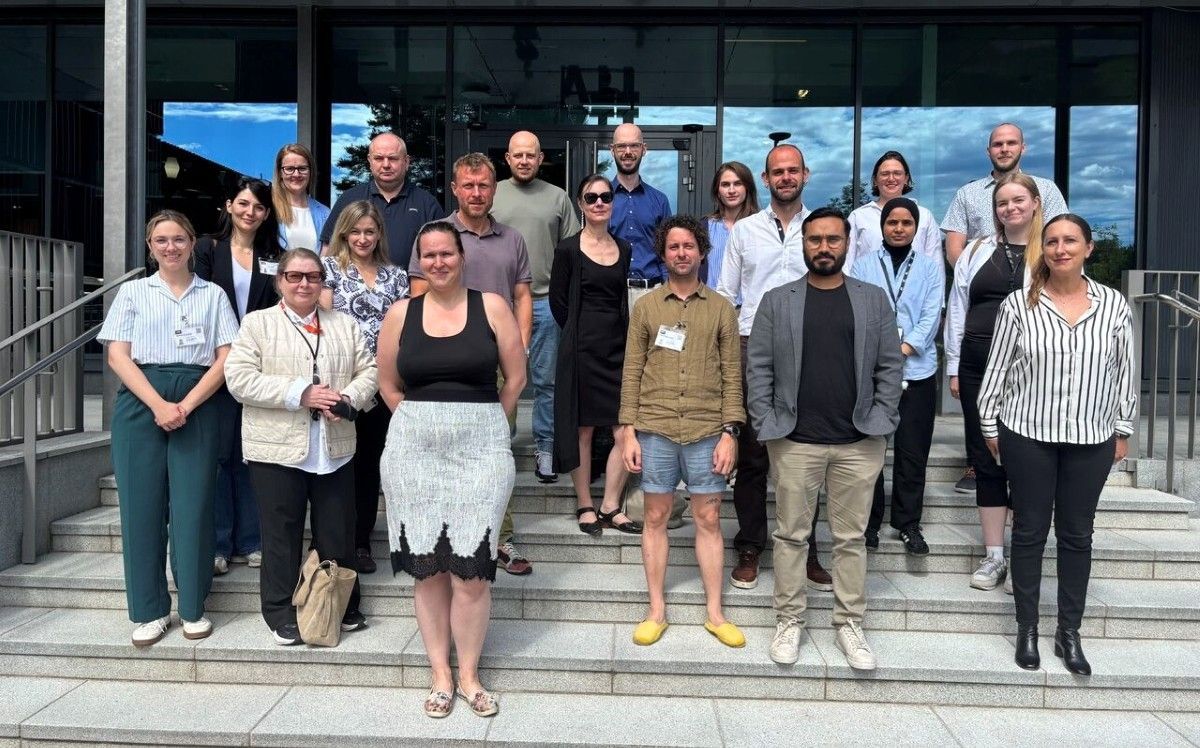
CIDAUT, represented by Aldana Chini and Adrián Martín, travelled to Espoo (Finland) for the Sea4Volt consortium meeting on 22–23 June, hosted by project coordinator VTT. Marking the transition from the project’s first to second year, the meeting brought together the consortium to review progress across all eight work packages, from advanced materials and components and stack-level scale-up (Gdańsk University of Technology) to catalyst ageing studies and prototype design and validation.
During the sessions, CIDAUT presented its work on materials and coating corrosion studies, flow field and cell design, as well as its progress on Life Cycle Assessment. Furthermore, as the leader of WP8—which is dedicated to Life Cycle Sustainability Assessment (LCSA) and brine valorization—CIDAUT facilitated a collaborative workshop. This took placeafter the General Assembly where partners aligned priorities for the months ahead. The second day extended the discussion beyond the consortium, as Sea4Volt joined sister projects HySEas and SWEETHY for a joint public webinar, «Direct Seawater Electrolysis- From Challenges to Solutions,» exploring the shared scientific and technological challenges of producing green hydrogen directly from seawater.
About SEA4VOLT:
The Sea4Volt Project is a Horizon Europe initiative running from September 2025 to August 2028. It is developing a low-temperature Anion Exchange Membrane (AEM) electrolyser designed to produce green hydrogen directly from seawater without requiring freshwater or complex pre-treatment.
Henar Olmedo Joins the Executive Board of Hydrogen Europe Research
On 17 June, elections were held for the new Executive Board of Hydrogen Europe Research (HER) and Henar Olmedo, Project Manager at CIDAUT, has been elected to the role of Head of External Affairs. The renewed Board also confirmed Luigi Crema (Fondazione Bruno Kessler) as President, alongside representatives from leading European research organisations including CEA, DLR, SINTEF, CNH2, and Fundación Hidrógeno Aragón. The new role strengthens CIDAUT’s voice within one of Europe’s key hydrogen research networks, building on the CIDAUT’s long-standing participation in HER and in the wider Clean Hydrogen Partnership ecosystem. The Board held its first meeting on 9 July, offering an initial hands-on introduction to the role, with early discussions already turning to the European Commission’s Call for Evidence on the future of Joint Undertakings under the next Multiannual Financial Framework (MFF), a topic of direct relevance to HER and the wider Clean Hydrogen Partnership.
About HER:
Hydrogen Europe Research is a non-profit association of over 170 universities and research organizations across Europe dedicated to advancing clean hydrogen technologies. It serves as a key pillar in the European energy transition, linking academic breakthroughs with industry applications and advising EU institutions.