

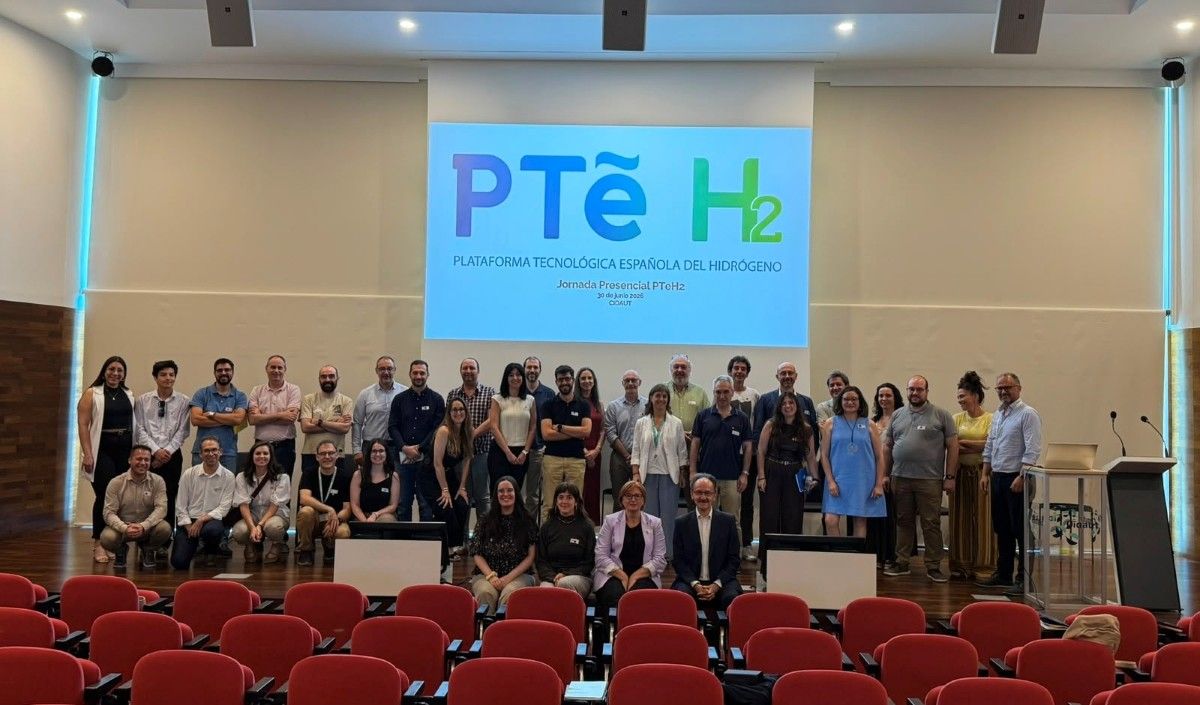
On 30 June, CIDAUT welcomed the Spanish Hydrogen Technology Platform (PTeH2) to its facilities in the Boecillo Technology Park (Valladolid) for the Platform’s annual in-person meeting, acting as host entity for this year’s gathering of the Spanish hydrogen ecosystem.
The day opened with a welcome address from Antonio González García-Conde, President of the PTeH2, setting the tone for a day focused on collaboration and forward planning. The morning continued with a session on the PTeH2’s 2026 roadmap, activities, and inter-member collaboration, led by África Castro, Vice-President of the PTeH2, and Lucía Pastor, from the Platform’s Technical Secretariat.
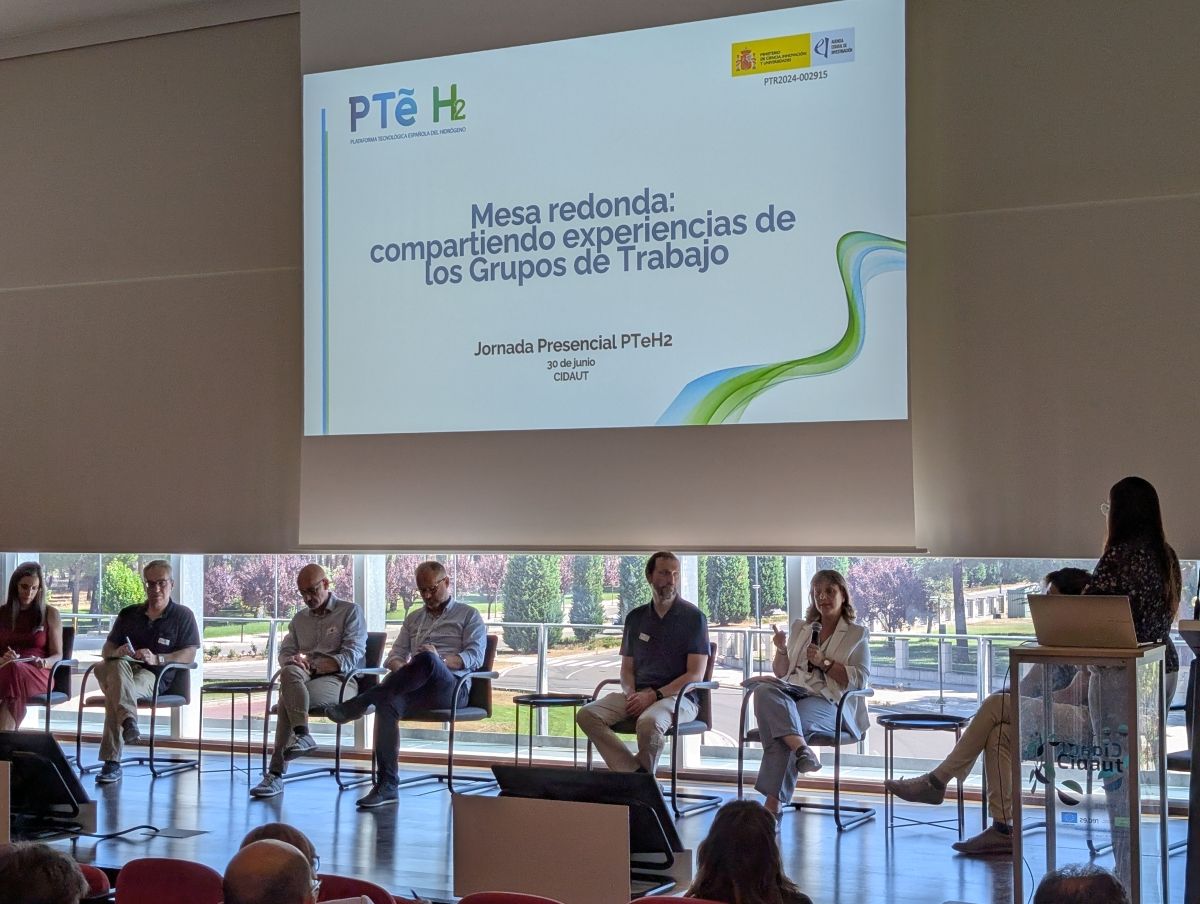
A central part of the programme was the round table «Sharing experiences from the Working Groups,» moderated by Marina Holgado (PTeH2 Technical Secretariat), which brought together Working Group coordinators and session leaders to exchange progress, challenges, and best practices across the Platform’s different technical areas.
The next session shifted to a participatory dynamic designed to gather member proposals, identify shared interests, and help shape future PTeH2 activities and priorities for the years ahead, before closing with conclusions and next steps presented by the Technical Secretariat.
The meeting also marked an emotional milestone: Antonio González García-Conde announced his upcoming retirement after more than two decades as President of the PTeH2, closing a long chapter of leadership for the Platform.
The day wrapped up with a networking cocktail and a guided visit to CIDAUT’s facilities, giving attendees a first-hand look at the centre’s hydrogen research capabilities and current lines of work. As an active member of PTeH2’s Steering Group since its founding and currently coordinator/vice-coordinator of its Working Groups on hydrogen use in mobility and industry, CIDAUT was proud to host this milestone gathering for the Spanish hydrogen ecosystem.
About PTeH2:
The Spanish Hydrogen Technology Platform (PTeH2), promoted by the Spanish Hydrogen Association (AeH2) and supported by the Ministry of Science, Innovation and Universities, has the mission of structuring and strengthening the hydrogen R&D&I ecosystem in Spain.
PTeH2 acts as a benchmark forum that brings together the main stakeholders in the value chain to identify technological priorities, promote knowledge generation and transfer, and contribute to the development and deployment of hydrogen technologies at the national level.