

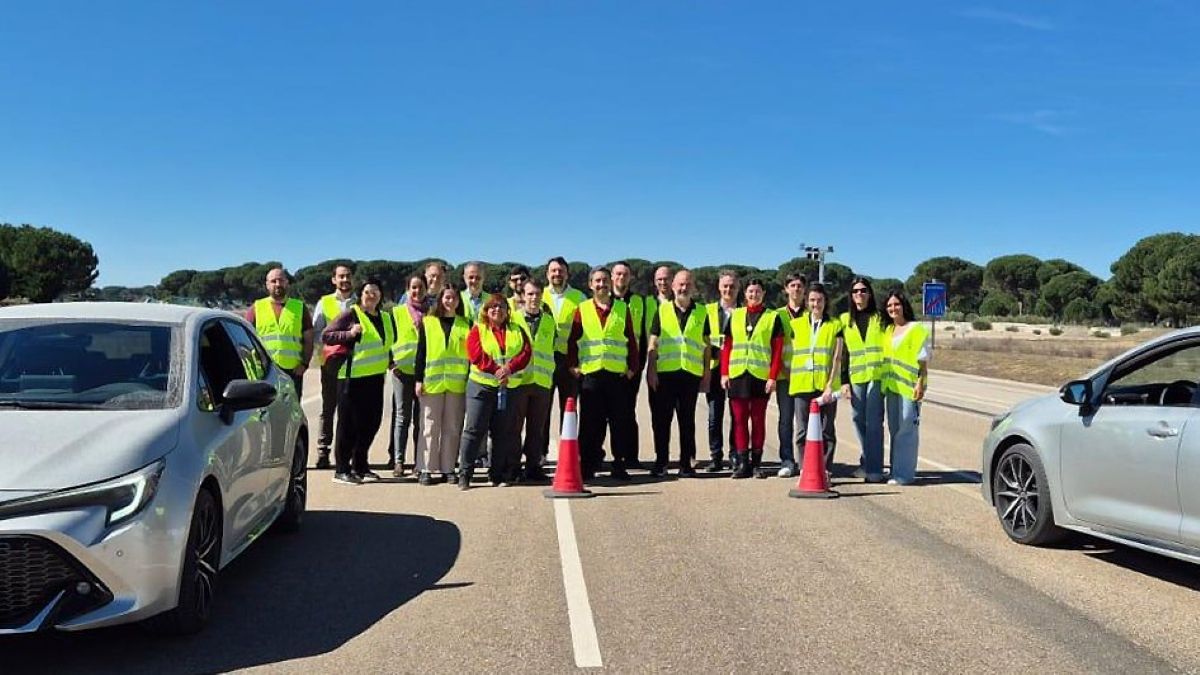
At its Mojados proving ground, CIDAUT has recently conducted an evaluation campaign focused on user acceptance of an innovative autonomous driving system designed to adapt to individual driving preferences. The system introduces a configurable driving profile concept, enabling users to select behavioral modes—such as conservative, balanced, or dynamic—that tailor the vehicle’s responses in real time. This approach aims to bridge the gap between fully automated driving and user trust, addressing one of the key challenges in the deployment of advanced driver assistance and autonomous technologies.
The trials brought together all partners of the European BERTHA project, fostering a collaborative environment in which technical performance and human factors were assessed simultaneously. By integrating expertise from multiple domains, including vehicle dynamics, human-machine interaction, and safety validation, the consortium ensured a comprehensive evaluation framework aligned with current European research priorities.
During the testing sessions, a wide range of use cases was analyzed under controlled yet realistic conditions. These scenarios encompassed varying levels of operational risk, from higher to lower time to collision scenarios. This structured approach allowed researchers to observe not only system robustness, but also user perception, comfort, and confidence across different driving styles.
Preliminary observations indicate that giving users the ability to influence the driving behavior of an autonomous system significantly enhances perceived control and acceptance. Participants reported greater trust when the system’s actions aligned with their personal expectations, particularly in moderate- to high-risk scenarios where driving behavior becomes more noticeable.
These activities represent a key milestone for the BERTHA project, highlighting the importance of user-centered design in the evolution of autonomous mobility. The insights gathered at Mojados will contribute to refining adaptive driving algorithms and shaping future standards for human-centric automation in transport systems.
The research leading to these results has received funding from Horizon Europe under Grant Agreement 101076360.